By Megan Murray
Decorating a small bedroom might feel like a challenge, but with a considered approach and the right styling, you can bring out the best in any space.
Our Houses offer a range of bedrooms, from Tiny and Medium, to suites and apartments. Whatever the size, each one is designed to enhance its features and unique character, creating a place that members can relax in.
Indeed, a smaller bedroom is no less restful and, if its cosiness is successfully enhanced, concentrating on the sole purpose of the room can add to its tranquillity. Our interior designers look at them holistically, balancing space optimisation and storage ideas with design features.
Here, we offer an insight into our process when decorating small bedrooms and share ideas on how to maximise space.

Use colour, pattern and materials to make a room feel bigger
'Less is more' is a simple rule to remember when trying to open up a room. Intense colours or busy patterns can overwhelm a space, so we recommend keeping the scheme muted.
'Opt for light colours on the walls to enhance the space that you have,' says Soho House Lead Designer Severine Lammoglia. 'My advice is to try as many testers as possible, because colours react differently in varying lights and will change once they're in the room.'
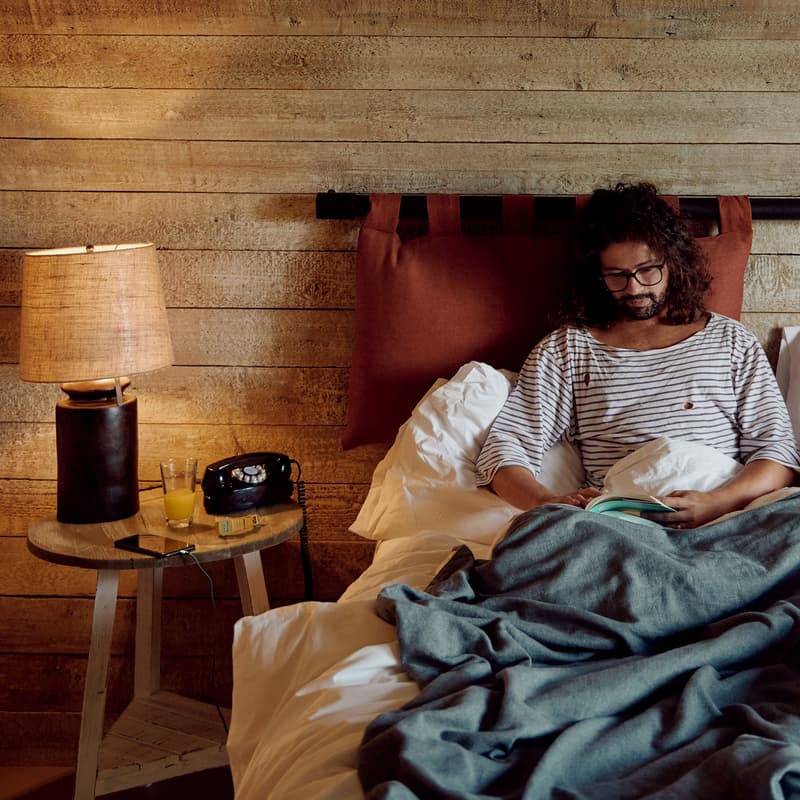
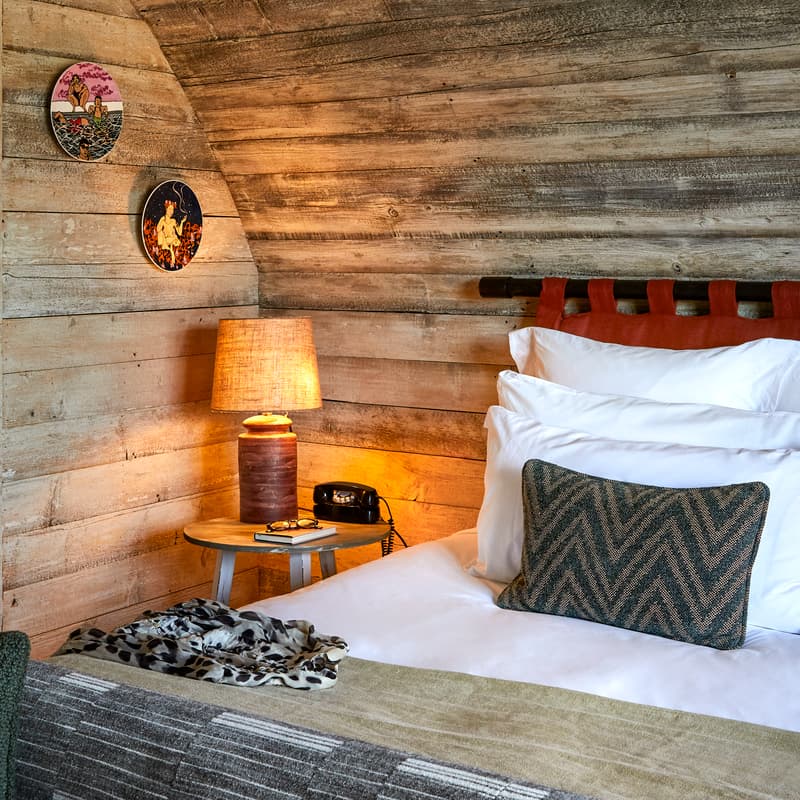
'Echo this with light-wood joinery and muted main fabrics on the furniture. Bring in patterns and colours with cushions, but avoid doing this too heavily as it can be overpowering. For example, in the Piglets at Soho Farmhouse, we've used detailed cushions to add character, while incorporating natural materials elsewhere.'
Choose furniture carefully
With limited room, furniture decisions must be tactical. Both material and positioning can make an impact and add an element of airiness.
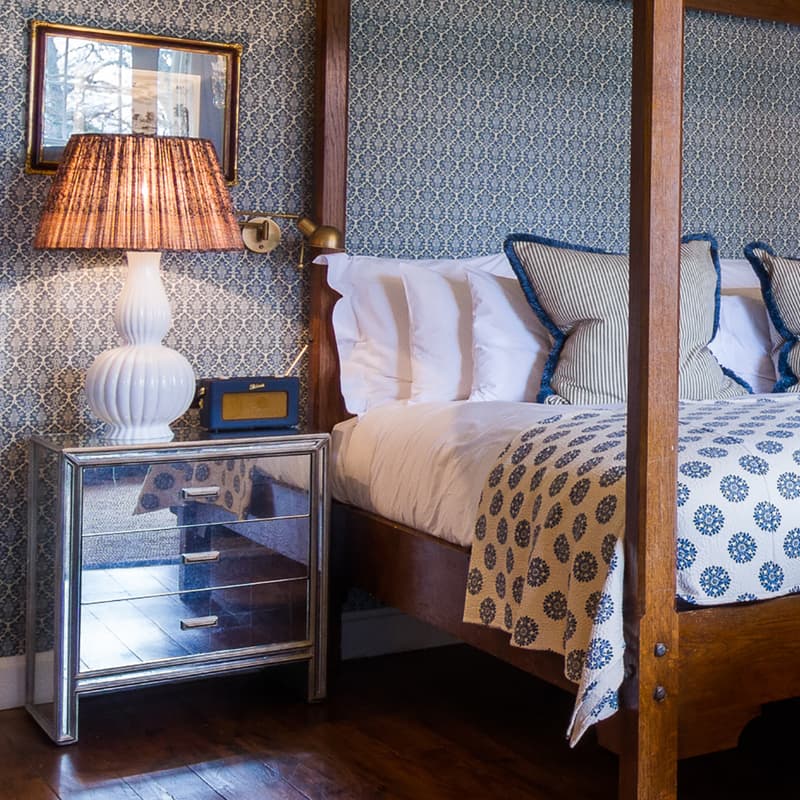
'In a small bedroom, swap a wooden bedside table for glass and watch how the transparency creates the illusion of space,' says Lammoglia.
An easy win when choosing furniture is to consider each piece's depth. As Lammoglia points out, the slimmer the depth, the more floor space you'll have. 'Pick consoles that sit closely to the wall,' she says. 'And save your counter space by using wall lighting and avoiding clutter.'
Make the most of lighting
Light plays a big role in the feel of a space, so it's important to be intentional with how you use it. Optimise whatever natural light you have by choosing curtains in a light fabric and a similar colour to your walls. Keep them hanging away from the window, too, as this will help daylight pass through into the room.
'When we were designing smaller bedrooms in Soho Warehouse in LA, we kept the walls a warm white colour and paired this with ivory curtains to create continuity,' says Soho House Lead Designer Candace Campos.
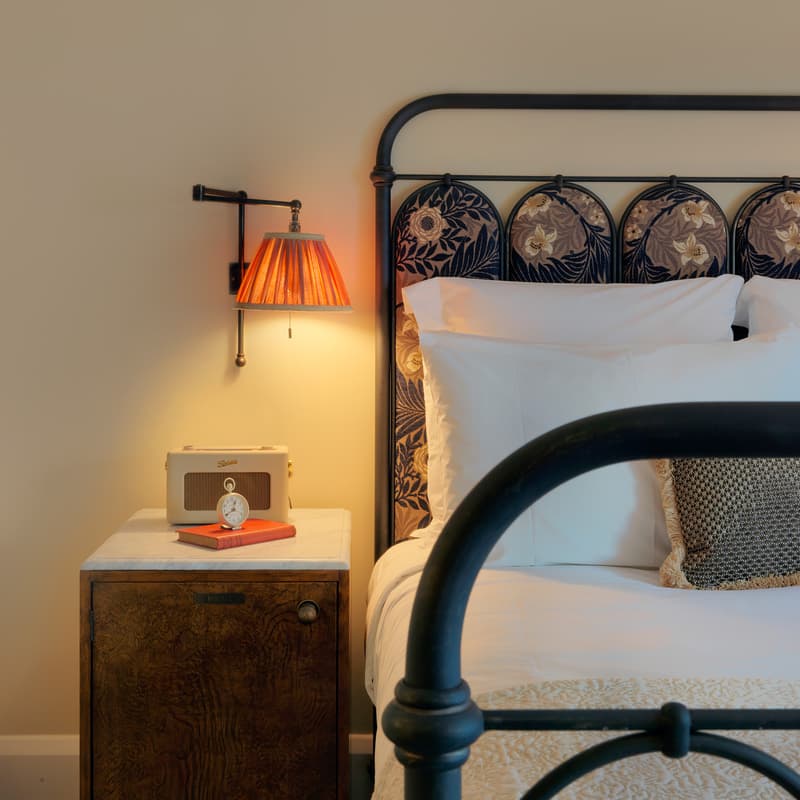
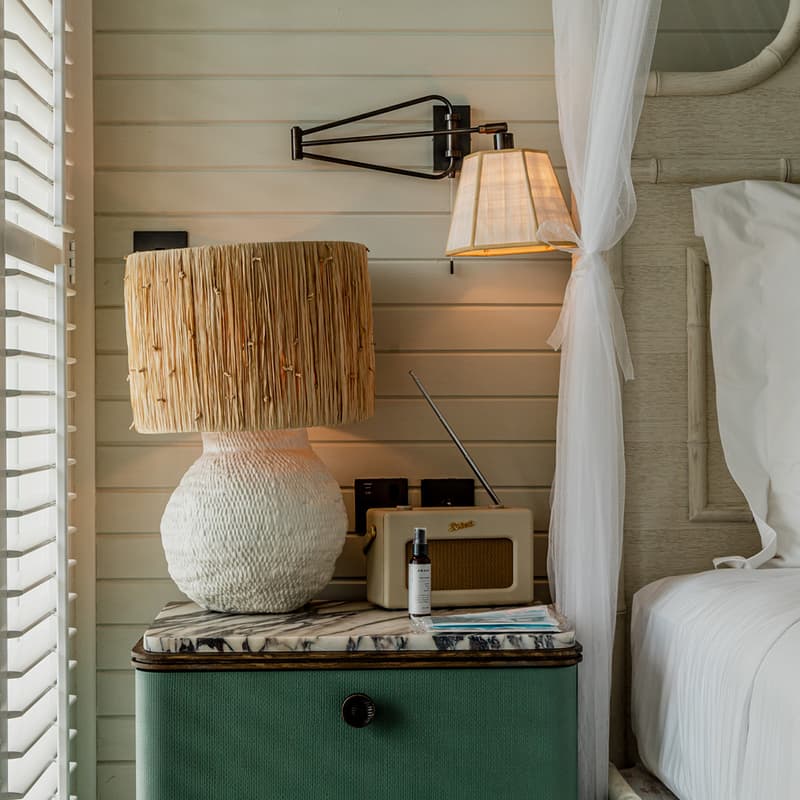
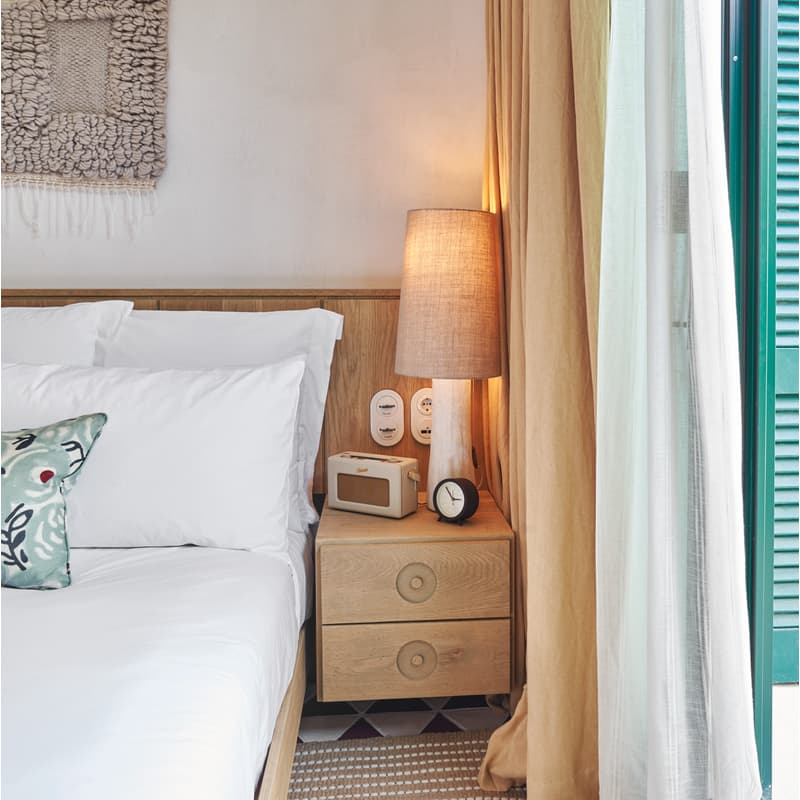
In our Houses, we use high and low-level lighting schemes to achieve a warm glow. This means you won't ever find an overhead light on; instead, clusters of lamps around the room create ambience.
Floor lamps can take up valuable space and table lamps can crowd counter tops. However, using wall sconces is another route to soft lighting. We use dimmer switches in the Houses to get the brightness just right, which is a feature that's also repeated across our Soho Home products.
Get creative with storage solutions
When designing our soon-to-open Paris House, Lammoglia experimented with storage options to cater to the characterful shapes of the rooms.
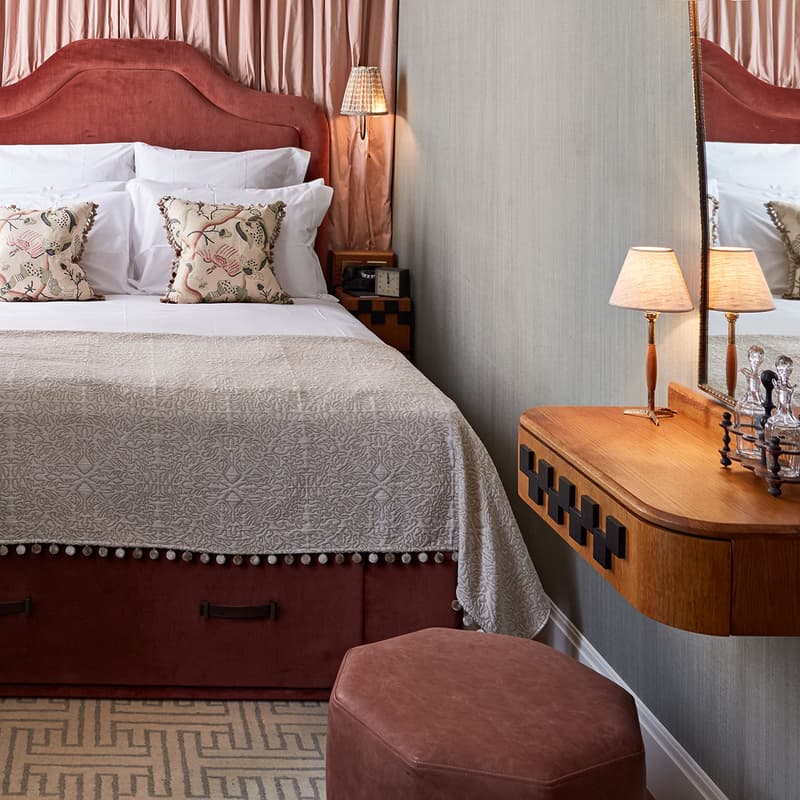
'We added custom-built, fully upholstered drawers to the base of beds, so that guests could store folded garments. This is a great alternative to a wardrobe as people often overlook this space, but if it's there, use it,' she says. 'Another idea is to source a vintage coat rack with a shelf for both hanging and stacking space.'
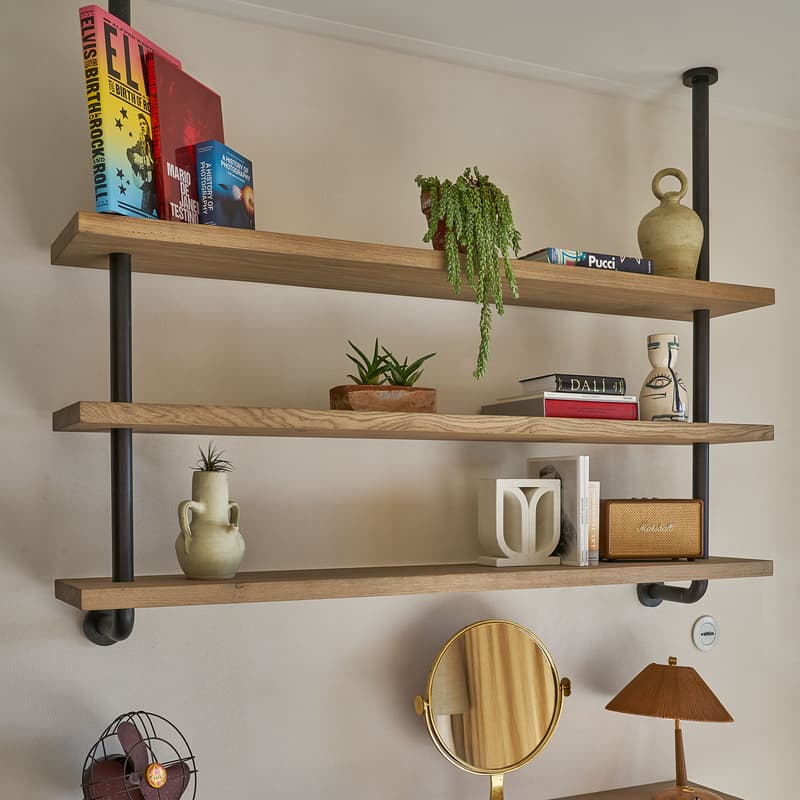
Shelving is also key in a small bedroom for adding decoration and placing items such as a small lamp or radio. You can also position them one above the other to make an impact.
Merge the purpose of rooms
Another way to open up a space is to try and pull two rooms together by fusing their purpose and giving the impression of continuity.
One of the easiest ways to do this is with an en suite. 'Bring the bathroom into your bedroom,' advises Lammoglia. 'Instead of keeping them separate, opening them up to each other creates a sense of a bigger space. We do this by putting the vanity cabinet in the bedroom to connect the way you use these areas.'

Cleverly position the bed
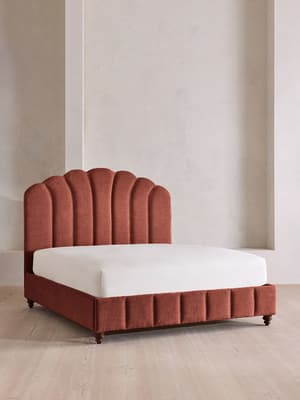
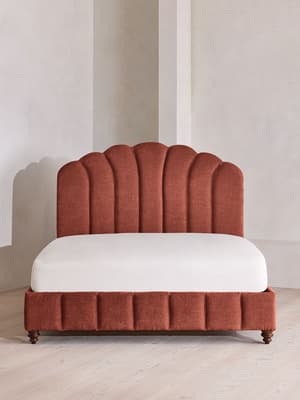
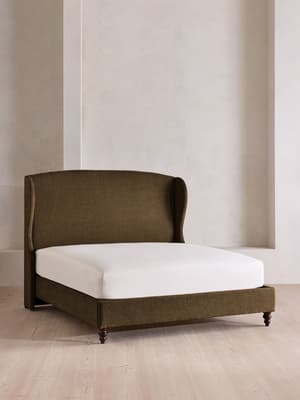
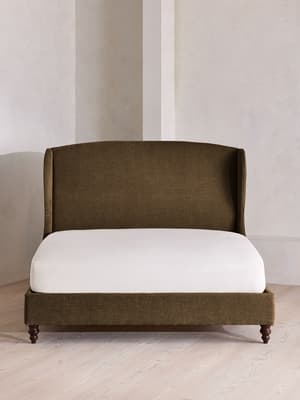
A bed is the largest piece of furniture in a room and therefore takes up the most space.
While it might make sense to push it into a corner, we like to position ours with the headboard against a central wall to make it the focus. Then, we accentuate the bed's appeal by amping up the comfort factor.
Every bed in our Houses is dressed with a set of seven pillows. The formation follows three medium, square pillows along the back, against the headboard. Then, we have two large, firm pillows layered in the middle, and two medium, long pillows at the front. This is followed by two decorative cushions and a throw.